
Top 10 Breakthrough Medical Technologies to Watch in 2025
Healthcare technology is advancing at an extraordinary pace, reshaping how care is delivered, how patients are monitored, and how health data is managed. From AI-powered diagnostics to wearable devices that detect early health issues, today’s innovations are redefining what’s possible in modern medicine.
As these cutting-edge technologies move from research labs into clinical settings, the need for high-performance, reliable interconnect solutions becomes more critical than ever.
In this blog, we explore 10 emerging healthcare technology trends set to make a significant impact in 2025:
- Next-Gen Surgical Robotics
Surgical robotics are setting new standards for precision in the operating room. These advanced systems enhance surgeon dexterity and visualization, enabling complex procedures—such as spinal surgeries and cardiac ablations—to be performed with increased accuracy and reduced trauma.
With integrated AI for real-time guidance and adaptive movement, surgical robots are helping drive better clinical outcomes, quicker recovery times, and fewer complications.
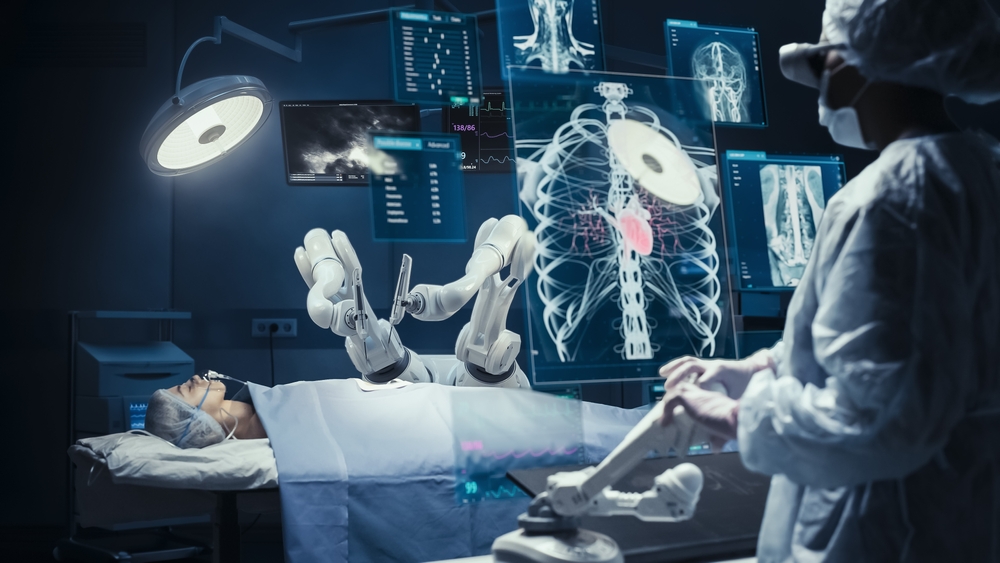
Surgical Robotics
- Wearable Devices & the Internet of Medical Things (IoMT)
Wearables and IoMT technologies are transforming patient care by enabling continuous, real-time monitoring of vital signs like heart rate, glucose levels, oxygen saturation, and respiratory function.
From smartwatches that detect arrhythmias to skin patches that monitor blood sugar noninvasively, these innovations are minimizing hospital visits and improving chronic disease management.
- Telehealth & Remote Patient Monitoring (RPM)
Telehealth and RPM technologies are expanding access to care, especially for rural and underserved communities. Devices like wireless blood pressure monitors, glucose sensors, and portable ECGs allow patients to share real-time health data from home.
These tools support proactive interventions, helping clinicians manage chronic conditions more effectively without the need for frequent in-person visits.
- 3D Printing & Bioprinting in Medicine
3D printing is revolutionizing the development of customized medical devices, from patient-specific prosthetics and anatomical models to surgical tools and implants.
Meanwhile, bioprinting—using bio-inks made from living cells—is pushing the frontier of regenerative medicine, with the potential to produce functional tissues and even organs in the future. These high-precision applications demand durable, sterilizable, and high-frequency interconnect solutions.
- Precision and Personalized Medicine
Healthcare is moving beyond the one-size-fits-all model toward precision medicine. By leveraging genetic profiles, lifestyle data, and biomarkers, providers can develop tailored treatment plans that improve outcomes and reduce side effects.
A range of diagnostic tools and real-time monitors support this shift, all relying on secure, high-performance interconnects to ensure data integrity and speed.

Personalized Medicine
- Extended Reality (XR) for Training & Patient Care
Extended Reality—spanning augmented, virtual, and mixed reality (AR/VR/MR)—is enhancing both clinical education and patient treatment. XR enables immersive surgical simulations, realistic anatomy training, and gamified rehabilitation experiences.
Whether it’s a clinician rehearsing a complex surgery or a stroke patient engaging in virtual therapy, XR depends on ultra-low-latency, high-bandwidth data transmission to ensure seamless performance.
- Big Data & Predictive Analytics
Big data and predictive analytics are reshaping how care is delivered by enabling earlier detection and intervention. Embedded analytics in today’s medical devices can identify anomalies, predict adverse events, and recommend timely treatments.
Whether it’s anticipating a cardiac arrest in the ICU or tracking infection risk post-surgery, these systems rely on constant, high-volume data flow to deliver real-time insights.
- Neural Implants & Brain-Computer Interfaces (BCIs)
Neural implants and BCIs are opening new frontiers in treating neurological conditions such as epilepsy, Parkinson’s disease, and ALS. These technologies translate brain activity into control signals, enabling patients to communicate or move prosthetic limbs.
Because they operate within the body, these systems require highly miniaturized, biocompatible, and reliable interconnects to function effectively and safely.
- Digital Health Devices & Continuous Monitoring
Continuous health monitoring is becoming the new standard—especially for elderly patients and those with chronic diseases. Devices such as smart biosensors and cloud-connected wearables allow for 24/7 data collection and analysis.
These tools help detect early warning signs, prompt timely care, and improve patient outcomes—all while functioning in non-clinical environments where consistent performance is essential.
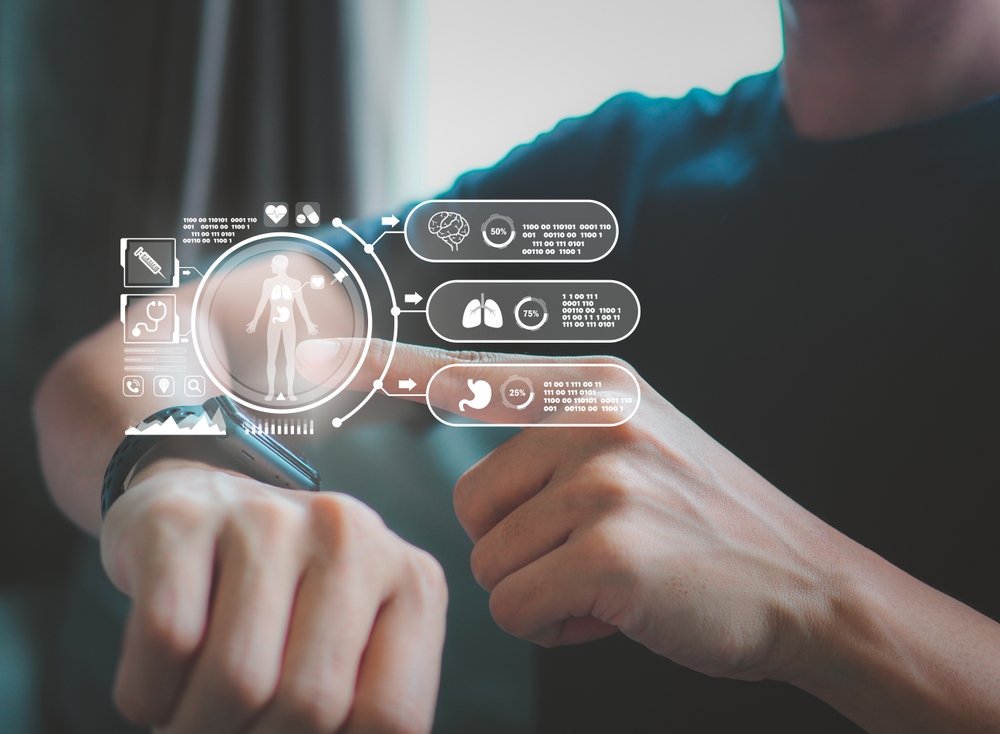
Digital Health Devices & Continuous Monitoring
- Pulsed Field Ablation (PFA) for Atrial Fibrillation
Atrial fibrillation affects millions, and Pulsed Field Ablation is emerging as a game-changing treatment. Unlike traditional thermal methods, PFA uses electrical pulses to selectively ablate heart tissue while minimizing collateral damage, such as injury to the esophagus.
This technology requires exact energy delivery and seamless communication between ablation systems and catheter devices.
The Future of Healthcare is Now
As we enter 2025, the healthcare industry is undergoing a profound transformation. Medical treatments are becoming more personalized, preventative, and data-driven. Advanced technologies are improving both physical and mental health outcomes while empowering patients with greater access and control over their care.
This new era of innovation promises a smarter, more connected, and more equitable healthcare system—built on a foundation of reliable, high-performance technologies.


Leave a Reply
Want to join the discussion?Feel free to contribute!